There’s a comfortable assumption about time.
That it softens things. That distance does its work gradually and reliably — that what felt sharp and immediate in the living of it eventually becomes something easier to carry. Something worn smooth by years of handling. Something you can set down when you need to and pick back up without it cutting you.
Sometimes that’s true.
But not always.
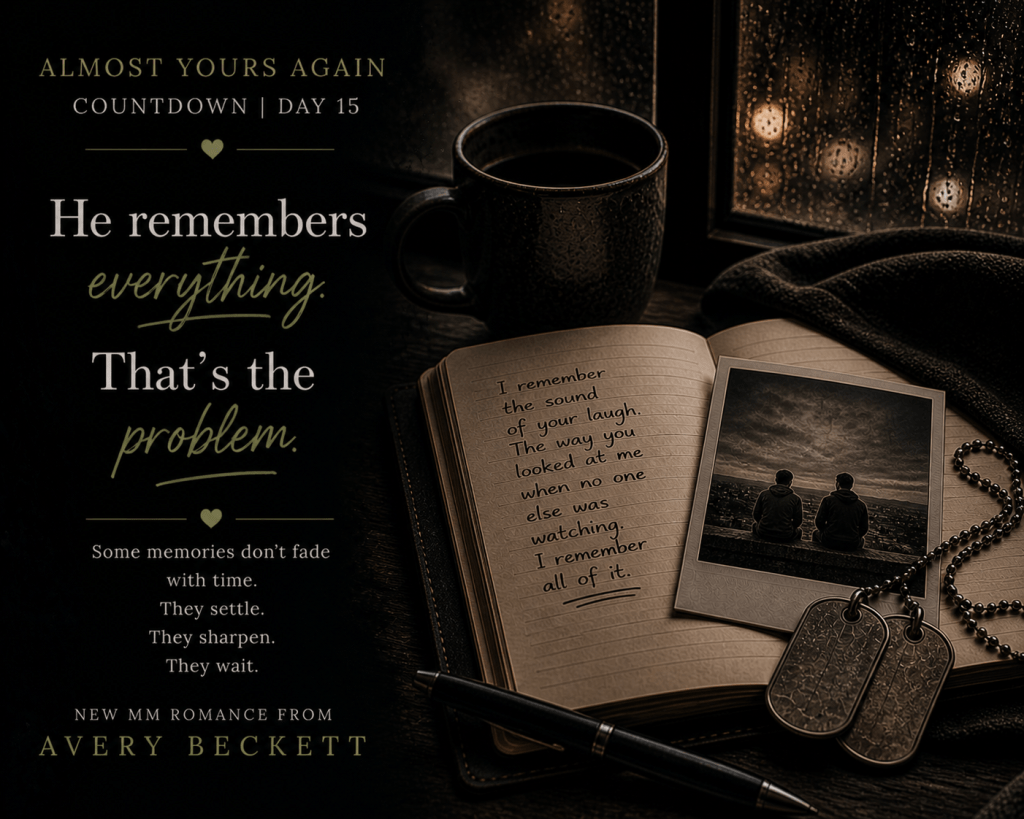
Some memories don’t fade. They don’t blur at the edges or lose their colour or compress into a generalised feeling that’s easier to manage than the specific thing itself. They settle. They shift slightly, maybe — the way anything does when it’s lived with long enough — but they don’t lose their clarity. If anything they become more defined over time. More precise. The irrelevant details fall away and what’s left is exactly what mattered. Not just what happened, but how it felt. What it cost. What it meant in the moment and what it continued to mean long after the moment was gone.
Marc remembers.
Not in the vague, softened way that would make this simpler. Not in the way that would allow him the mercy of uncertainty — of not being quite sure, after all this time, whether what he remembers is accurate or whether the years have reshaped it into something more than it was. He doesn’t have that. What he has is something detailed and specific and stubbornly intact, something that has sat quietly in him through everything that came after, maintaining its weight with no apparent interest in diminishing.
That’s part of why this isn’t simple.
He’s not working with an impression of the past. He’s working with the past itself — precise and present and fully capable of making itself felt.
And when that kind of memory meets the reality of the present again, it doesn’t stay quiet and cooperative in the corner where it’s been kept. It surfaces. It insists. It lays itself alongside what’s actually happening and demands to be part of the reckoning.
Memory like that doesn’t ask for attention.
It takes it.
Almost Yours Again