I’ve been asked before why I keep writing damaged men.
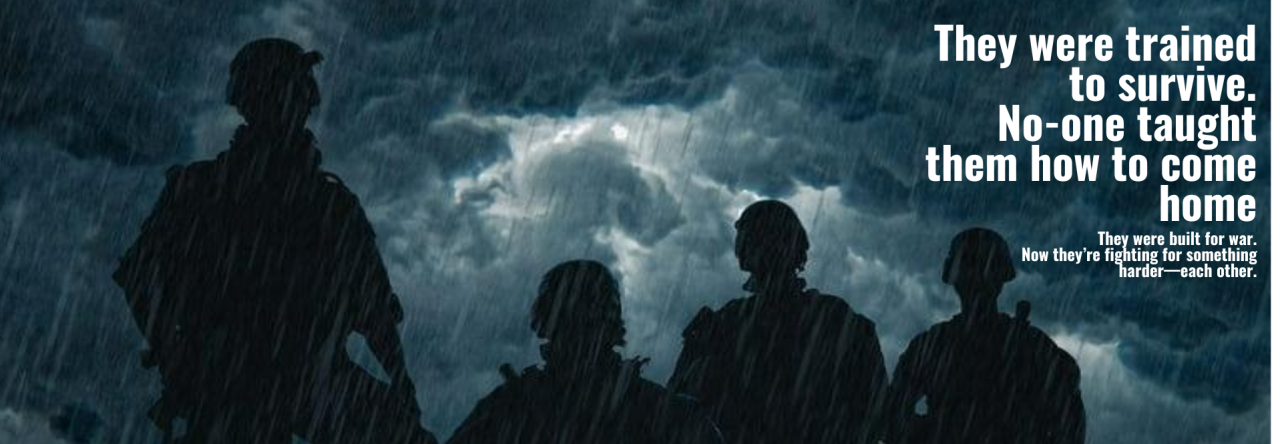
It’s a fair question. The Compass Point universe is full of them — ex-military, ex-operational, men who came home carrying things that don’t show up on any medical chart. Men who are functional on the outside and quietly fractured somewhere deeper. Men who have learned to perform okayness so convincingly that even the people who love them sometimes miss what’s underneath.
The honest answer is: because that’s what humans look like to me.
Not the polished ones. Not the ones who have it together. The ones who are doing their level best with a set of tools that got bent out of shape somewhere along the way. The ones who still show up, still try, still reach toward connection even when every instinct they have is telling them to pull back and protect themselves. Those are the characters that feel real to me. Those are the characters I can’t stop writing.
Marc and Finn felt important for a reason that’s a little difficult to articulate, which is usually a sign that it matters.
They’re not damaged in the same ways. That was the first thing that pulled me toward them — the idea that two people can be equally broken and broken entirely differently, and have to learn to navigate not just each other’s wounds but the strange places where those wounds intersect. Where one person’s damage presses directly on another person’s fracture line without either of them meaning for it to. That’s where the interesting writing lives. Not in the wound itself, but in the gap between two people who are both trying and both struggling and both — underneath all of it — desperately wanting to be known by someone.
There’s a particular kind of courage in an emotionally damaged character that I don’t think we talk about enough. It’s not the courage of the battlefield, though these men have that too. It’s the smaller, quieter, more frightening courage of choosing to try again. Of staying in a room when every trained instinct says to leave. Of saying the thing out loud when silence would be so much safer. That courage isn’t dramatic. It doesn’t make for a great action sequence. But it’s the thing that undoes me every time, as a writer and as a reader.
Marc and Finn made me work for their story in ways that felt important. They didn’t make it easy. They weren’t going to let me write around the hard parts or soften the edges or resolve things faster than they could realistically resolve. They needed me to sit in the discomfort with them, which is — I think — exactly what good romance requires. Not the avoidance of pain but the willingness to move through it, together, toward something real.
The thing about broken characters is that wholeness, when it comes, means something. It can’t be taken for granted. It was paid for in full, and the reader knows it, and the characters know it, and that earned quality of the happy ending is what separates a love story that stays with you from one that simply concludes.
I write damaged men because damage is honest. Because healing is the most hopeful thing I know how to put on a page. And because Marc Dalton and Finn Cooper reminded me, all over again, that the most human thing any of us can do is keep reaching for connection even when we’re not sure we deserve it.
They deserved it.
They always did.
— Avery

