There’s a particular kind of luck that some people are born into — a family where love is the default setting, where you are held before you even know you need holding. I think about those people sometimes, and I mean it genuinely when I say: good. More of that in the world, please.
But that’s not everyone’s story. And it certainly wasn’t mine.
I’m not here to paint my childhood in colours it didn’t have. It wasn’t all darkness. I had two siblings who were — and remain — the exceptions that prove the rule, the people who make me believe that blood can mean something. But the broader family I was born into was a place where love was conditional at best and weaponised at worst. Where violence — personal, physical, emotional — was part of the furniture. You stop seeing it after a while. It just becomes the shape of the room you live in.
What I know now, and what I think many people who grew up in that particular kind of room come to understand, is that the experience doesn’t break you so much as it redirects you. It makes you a finder. You learn, early and out of necessity, to look for your people — not the ones you share a surname with, but the ones who see you. The ones who stay. The ones who, without any obligation of blood or law or paperwork, decide that you are worth showing up for.
That is found family. And for a lot of us, it is the first experience of family we ever truly recognise as such.
It shouldn’t surprise anyone, then, that found family is threaded through almost everything I write.
The Compass Point universe is built on it. Marc and Finn don’t come from soft beginnings — neither of them. What they build together, and what they build with the people around them, isn’t inherited. It’s constructed. Brick by careful brick, out of trust that had to be earned because neither of them knew how to offer it freely. Knox and Garrett didn’t become parents because it was easy — they became parents because they looked at three children the world had already failed and decided, simply, not on our watch. That’s not biology. That’s devotion. And I’d argue it’s the harder and more intentional form of love.
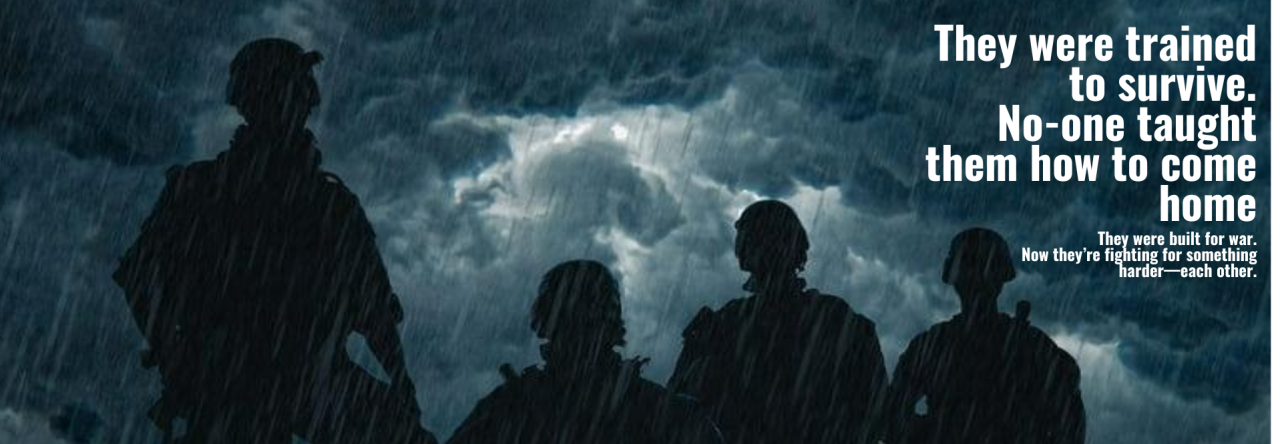
Rafferty and Enola, in Silent Ground, find each other in the aftermath of separate survivals. What grows between them, and between them and the people they gather — that’s not the family either of them was handed. It’s the one they finally allowed themselves to have.
I write these stories because I believe them. Because I have lived a version of them. Because I know what it feels like to sit around a table with people who chose to be there, and to feel — perhaps for the first time — that the word home might actually apply to you.
You don’t have to be blood to be bound by love.
I’ve come to think that’s not just a comfort for people like me — it’s actually a more honest description of what love is. Choice, repeated. Presence, chosen again and again. The decision, made daily, to remain.
Blood is an accident of birth. Family — real family — is something you make.
Some of us just start making it a little earlier than others.
— Avery
 Avery Beckett Books
Love this! ❤️
LikeLike