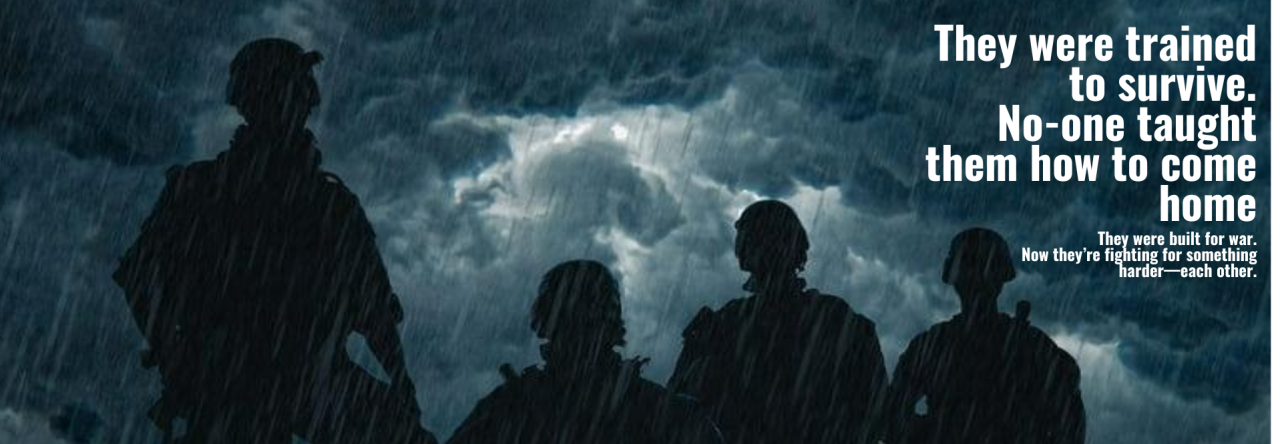
Every book has an atmosphere before it has a plot. A feeling, a weight, a particular quality of light. Almost Yours Again had that before it had a single scene — and it came not from research, not from craft, but from friendship.
I have known someone since he was very small. I watched him grow from a toddler into a young man, and then into a soldier, and I am deeply proud of the person he became. His story is not mine to tell, and I won’t tell it here. But over the years, in the way that people who trust each other sometimes do, he told me things. Not everything. Enough.
He stood on an IED. His was disarmed by his teammates in time. Three others on his team were not so lucky.
I want to sit with that for a moment, because I think it needs to be said plainly rather than folded into something more literary. He came home. Three of his people didn’t. And he has to live inside that fact every single day — the randomness of it, the absolute absence of fairness in it, the way survival can feel less like a gift and more like a question you can never fully answer.
He came home changed, as soldiers do. He struggled to fold himself back into the shape of ordinary life — the rhythms of it, the smallness of it after everything he’d seen and done and carried. The world expected him to step back in, to fit the space he’d left behind, and that space no longer matched his edges. PTSD is not a plot device. It is not a dramatic flourish or a backstory beat. It is exhausting and relentless and often invisible to everyone but the person living inside it and the people who love them enough to keep watching closely.
He gave me things, through those conversations, that I could not have found anywhere else. Not the facts — the facts you can research. The texture. The specific, unglamorous reality of it.
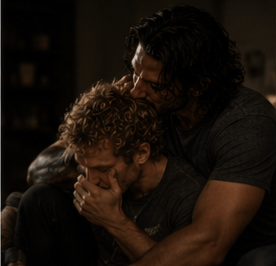
A lot of Finn’s choices in this book are his choices. The way Finn moves through the world, the things he reaches for and the things he flinches away from, the particular logic of decisions that might look self-destructive from the outside but make a precise kind of sense when you understand what he’s trying to manage — that came from someone real, who lived it, who was generous enough to let me sit with him in the hard parts of it. The survivor’s guilt that runs underneath Finn like a current — that is real too. Borrowed from someone who knows exactly how heavy it is.
I don’t write that lightly. I wrote Almost Yours Again with a constant awareness that real people survive these things, that real people are still surviving them, and that they deserve to see themselves rendered honestly rather than tidily. Marc and Finn are fictional. The emotional truth underneath them is not.
If this book resonates with you — if something in Finn’s struggle feels familiar, either because you’ve lived it or because you’ve loved someone who has — then it’s doing what I hoped it would do.
And to the friend who let me borrow from his experience without ever asking for anything in return: you know who you are, and I am still, always, proud of you. All the way back to when you were very small.
— Avery
 Avery Beckett Books