The Ones That Never Really Leave You

There are some characters who move on.

They meet someone new. They build something different. They close the door on what came before and they don’t look back. And honestly? Good for them. Clean endings are a gift. Not everyone gets one, but when a character earns it, there’s a particular satisfaction in watching them walk through that door.

And then there are the others.

The ones who don’t leave. Not really.

They might not be physically present. They might be gone for years, or a lifetime, but they linger in the quiet spaces. In the habits you don’t realise you’ve kept. In the way you reach for your phone at a particular time of day out of sheer muscle memory, months after there’s any reason to. In the way you compare every almost to something that was never quite finished.

I’ve always been drawn to those stories. I suspect you know that about me by now if you’ve spent any time in my books. My people carry things. They are, most of them, exceptionally good at functioning — at performing fine, at continuing to show up and do the work — while quietly hauling the weight of something unresolved. It’s not a flaw I write into them. It’s one of the things I find most recognisably human about them.

Not because those stories are easy. They’re not. They’re messy and complicated and often a little uncomfortable to sit inside. But they feel honest in a way that clean endings sometimes don’t. The world is full of people walking around with someone living in the back of their chest — someone they don’t talk about, someone they’ve made their peace with, mostly, except on the days they haven’t.

Almost Yours Again lives in that space.

This isn’t a story about finding someone new. It’s not a story about moving on, about choosing differently, about learning to want something safer. It’s about what happens when the person you never stopped carrying comes back into your life — not as a ghost, not as a memory, but standing right there in front of you, real and present and looking at you like time hasn’t passed at all — and suddenly everything you’ve spent years keeping carefully contained starts to shift.

Because love doesn’t always end just because time passes. Sometimes circumstances end. Distance ends. The life you’d both been planning ends. But the thing underneath — that persistent, inconvenient, impossible-to-file-away thing — doesn’t always get the memo.

Sometimes it just waits.

I spent a long time with these two. Longer than I expected. They’re not easy people — neither of them is particularly inclined to make things simple, which made writing them a genuine exercise in patience and, occasionally, exasperation. But by the time I got to the end I understood exactly why they were each other’s person, and exactly why it had taken them this long to find their way back.

I hope you’ll come with me into their story.

Almost Yours Again is available now.
Why Some Characters Don’t Believe They Need Love

There’s a particular kind of character who walks into a story already convinced of one thing:

They are not the person who gets to be loved.

Not because they’re cruel.
Not because they’re incapable of it.

But because somewhere along the way they decided love wasn’t meant for them.

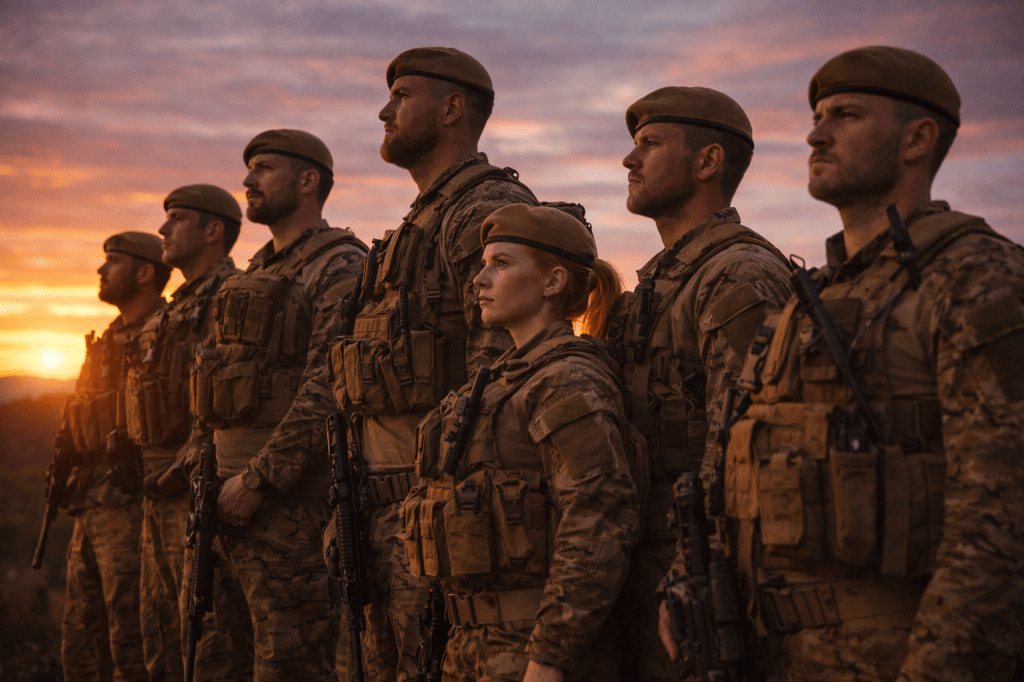
In the Avery Beckett universe, many of those characters are soldiers.

And soldiers learn very early that survival changes the way you see yourself.


Survival Guilt Changes the Equation

Soldiers carry a quiet mathematics in their heads.

Who came home.
Who didn’t.
Who should have.

Sometimes the answers to those questions don’t make sense.

Sometimes the person who lived was the one who believes they deserved it the least.

Survival guilt doesn’t always look dramatic. Often it’s quiet. A background noise that says: You’re still here, and they’re not.

Over time, that thought becomes something else.

A belief.

That the life you’re living now isn’t something you get to fill with joy.
That your job is simply to carry forward.

To finish the work.

To protect the people who remain.

Love starts to feel like something that belongs to other people.

People who didn’t walk away from the same battlefield.


Protectors Don’t Expect Protection

Another truth soldiers absorb is that their role in the world is very clear.

They are the ones who stand between danger and everyone else.

They are the shield.

When someone spends years living that way, the idea of being protected themselves starts to feel… wrong.

Unnatural.

They’re comfortable being the one who takes the hit.
The one who stays standing.
The one who makes sure everyone else makes it out.

But when someone tries to stand between them and the danger?

That’s harder to accept.

Because it disrupts the role they’ve built their identity around.

They believe they’re the protectors.

Not the protected.


Emotional Restraint Is a Survival Skill

For soldiers, emotional restraint isn’t just personality.

It’s training.

In high-risk environments, emotions can cloud judgement. Fear can slow you down. Grief can distract you when someone else’s life depends on your focus.

So they learn to compartmentalize.

They learn to set feelings aside until the mission is over.

The problem is that habit doesn’t disappear when the war ends.

It follows them home.

They become quiet about their pain. Careful with their emotions. Slow to trust anything that might destabilize the control they worked so hard to build.

And love—real love—is destabilizing.

It asks for vulnerability.

For openness.

For the kind of emotional exposure they’ve spent years learning how to avoid.


Touch Has to Be Earned

For some characters, touch is easy.

For soldiers who have lived with trauma, it often isn’t.

Physical closeness means trust. It means letting someone close enough to see what’s underneath the armor.

In many Avery Beckett stories, touch isn’t casual.

It’s earned.

The first hand on a shoulder.
The first quiet moment sitting beside someone without tension.
The first time a character realizes they didn’t instinctively pull away.

These moments matter because they signal something deeper.

Safety.

Not the absence of danger.

But the presence of someone who makes the world feel survivable again.


Love Feels Like a Risk They Can’t Justify

If you already believe your job is to protect others, love starts to look like a liability.

Because loving someone gives the world something to take from you.

It creates vulnerability.

It introduces the possibility of loss.

And for someone who has already lost too much, the instinct is simple:

Better not to start.

Better to stay alone.

Better to keep your focus on the mission.


Why They’re Wrong

The truth, of course, is that none of this means they don’t deserve love.

It means they’ve spent so long protecting others that they’ve forgotten they’re human too.

They forget that safety doesn’t only come from being strong.

Sometimes it comes from letting someone else hold the line for a while.

From letting someone see the parts of you that aren’t invincible.

From discovering that protection can go both ways.


The Quiet Power of Being Chosen

The most powerful moments in stories like these aren’t the dramatic declarations.

They’re the quiet realizations.

The moment a character understands that someone stayed.

That someone chose them.

Not because they were perfect.
Not because they were unbroken.

But because they were worth loving anyway.

And for someone who spent years believing love was for other people, that realization can change everything.

Because sometimes the bravest thing a protector can do…

is finally let themselves be protected.