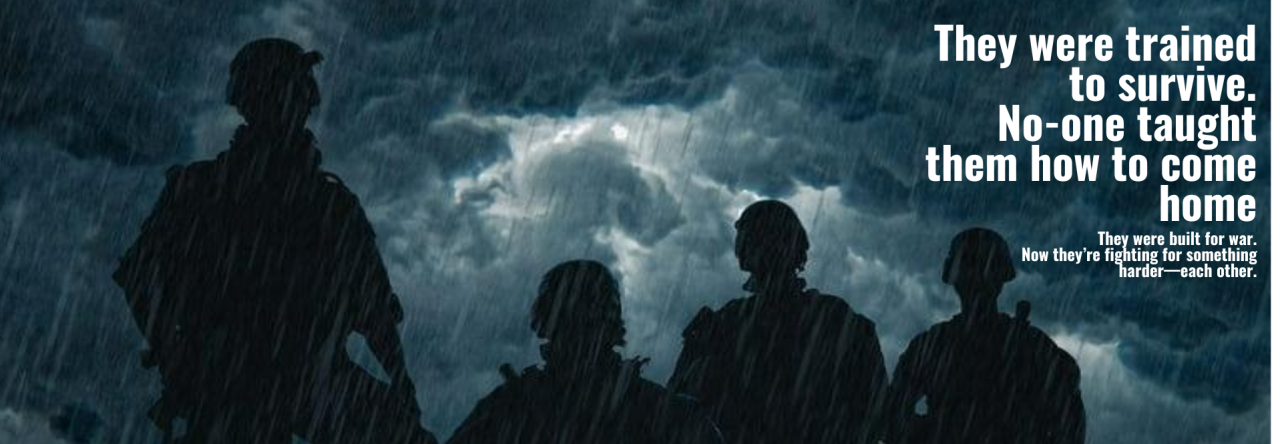
One Day (Give or Take a Time Zone)

Tomorrow. Or today, depending on where you are in the world and whether we’re running on Australian or US timelines, which is a question I genuinely cannot answer with confidence right now. Somewhere in the next twenty-four to forty-eight hours, this becomes real.

I should probably explain who I am, for anyone who has stumbled in here without context.

My name is Avery Beckett. I am one of four — yes, four — personas currently occupying the same head, which is exactly as chaotic as it sounds and also, apparently, standard industry practice. When I was at university they drummed it into us with considerable conviction: readers won’t follow authors across genres. If you write MM military romance and MM hockey romance and romantasy and magical realism, you need four personas. Keep your audiences clean. Don’t confuse anyone.

I’m not entirely sure I agree. But I also don’t want to alienate anyone, so four personas I have. It makes a certain kind of sense. Most days.
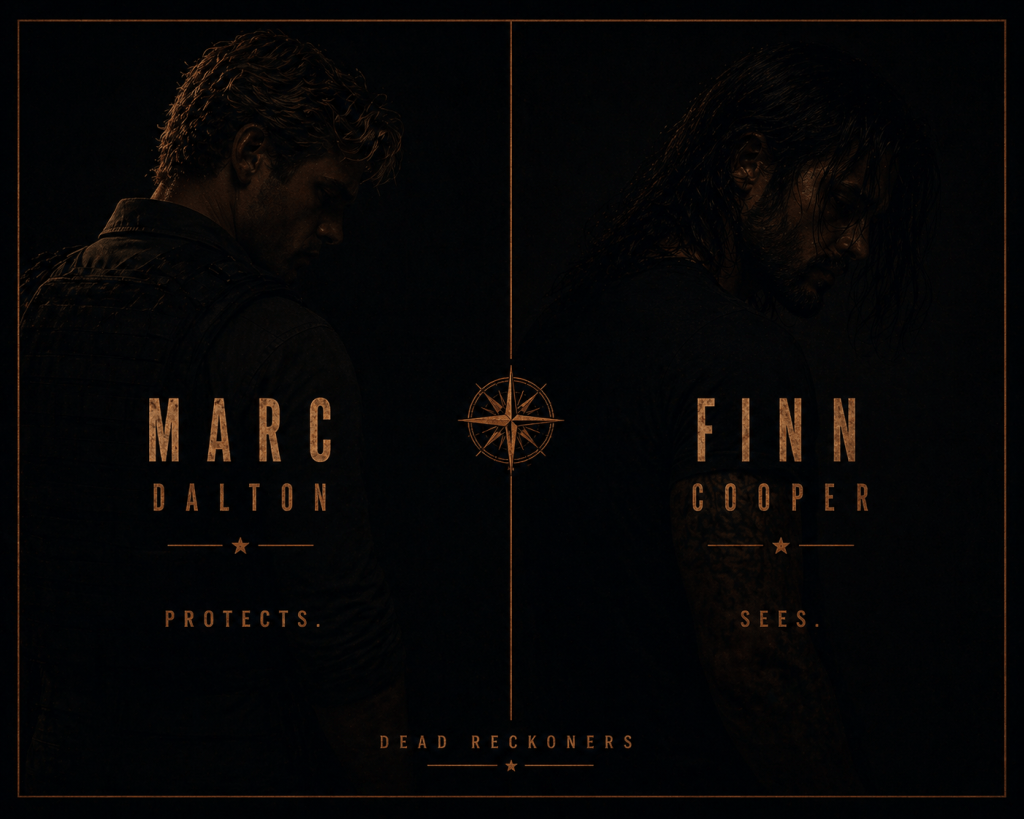
Avery is the military one. I am sassy and sarcastic and possessed of a sense of humour that runs darker than most people expect, which is appropriate given what I write. I have been living with the Compass Point universe since 2018 — refining it, deepening it, rebuilding it from the ground up over the last two years into something I’m genuinely proud of. Forty books across four ten-book series. MM, MF, FF, MFM — because love in the Compass Point universe doesn’t sort itself neatly into categories and I decided early on that I wasn’t going to make it. Whether that turns out to be a brave creative decision or a spectacular miscalculation remains to be seen. Probably both, knowing me.

And that’s before we get to the other Avery projects. The series following a team through special forces selection. The smoke jumper series. The gritty, dirty detective series set during and just after World War Two, which exists in a genre category largely of its own and which I love unreasonably.

I have been writing for a very long time. I have been writing this for a very long time. And somehow, despite all of that, despite the years and the drafts and the refining and the rebuilding and the four factory resets of the modem and the trivia nights and the cats and all of the rest of it — this still feels unreal.

One day. Maybe two. Somewhere in the gap between time zones, Almost Yours Again is going to exist in the world in a way it hasn’t existed before.

Thank you. For every comment and every share and every preorder and every kind word. For reading these rambling posts from someone who still can’t quite believe this is happening. For being here at the beginning of something that I have waited a very long time to share.

It means more than I know how to say. And given that I write for a living, that is saying something.
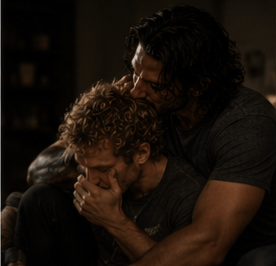

The Atmosphere Behind Almost Yours Again

Every book has an atmosphere before it has a plot. A feeling, a weight, a particular quality of light. Almost Yours Again had that before it had a single scene — and it came not from research, not from craft, but from friendship.

I have known someone since he was very small. I watched him grow from a toddler into a young man, and then into a soldier, and I am deeply proud of the person he became. His story is not mine to tell, and I won’t tell it here. But over the years, in the way that people who trust each other sometimes do, he told me things. Not everything. Enough.

He stood on an IED. His was disarmed by his teammates in time. Three others on his team were not so lucky.

I want to sit with that for a moment, because I think it needs to be said plainly rather than folded into something more literary. He came home. Three of his people didn’t. And he has to live inside that fact every single day — the randomness of it, the absolute absence of fairness in it, the way survival can feel less like a gift and more like a question you can never fully answer.

He came home changed, as soldiers do. He struggled to fold himself back into the shape of ordinary life — the rhythms of it, the smallness of it after everything he’d seen and done and carried. The world expected him to step back in, to fit the space he’d left behind, and that space no longer matched his edges. PTSD is not a plot device. It is not a dramatic flourish or a backstory beat. It is exhausting and relentless and often invisible to everyone but the person living inside it and the people who love them enough to keep watching closely.

He gave me things, through those conversations, that I could not have found anywhere else. Not the facts — the facts you can research. The texture. The specific, unglamorous reality of it.

A lot of Finn’s choices in this book are his choices. The way Finn moves through the world, the things he reaches for and the things he flinches away from, the particular logic of decisions that might look self-destructive from the outside but make a precise kind of sense when you understand what he’s trying to manage — that came from someone real, who lived it, who was generous enough to let me sit with him in the hard parts of it. The survivor’s guilt that runs underneath Finn like a current — that is real too. Borrowed from someone who knows exactly how heavy it is.

I don’t write that lightly. I wrote Almost Yours Again with a constant awareness that real people survive these things, that real people are still surviving them, and that they deserve to see themselves rendered honestly rather than tidily. Marc and Finn are fictional. The emotional truth underneath them is not.

If this book resonates with you — if something in Finn’s struggle feels familiar, either because you’ve lived it or because you’ve loved someone who has — then it’s doing what I hoped it would do.

And to the friend who let me borrow from his experience without ever asking for anything in return: you know who you are, and I am still, always, proud of you. All the way back to when you were very small.

— Avery

The Characters Who Refused To Be Minor

Every writer has them. The characters you built for a purpose — a plot function, a narrative requirement, a single scene that needed filling — who turn around somewhere around chapter three and inform you, with considerable conviction, that they have no intention of being what you designed them to be. They are going to be something larger. They were always going to be something larger. You just didn’t know it yet.

Flick Cooper was supposed to be a plot device.

I say this with full honesty and no apology, because understanding what she was supposed to be is the only way to appreciate what she became. Flick existed, initially, to explain Finn. Specifically, to explain why Finn had let himself go so badly — why a man with his capacity and his history had arrived at the state he was in when Marc found him. The answer was Flick. His sister. The one their father had sold, the one Finn had spent years quietly destroying himself to protect, the financial calculation he made every time he chose not to eat so the money could go somewhere it mattered more than feeding him. She was backstory. She was the why behind the wound.

She had other ideas.

Flick dug her heels in somewhere in the drafting and simply refused to leave. Not loudly — that’s the thing about Flick, she is not always loud about what she wants, she is simply immovable once she has decided — but with a persistence that made it increasingly clear that she was not going to be filed under ‘plot function’ and left there. She wanted the full story. She wanted the complexity. She wanted the band she’d built with Izabella, and she wanted Izabella with her, and she pulled both of them out of the margins and into the centre with the quiet stubbornness of someone who has survived considerable things and has decided she is owed a story of her own.

And she was right. She was absolutely right. Flick is one of the most specific and fully alive characters in the Compass Point universe, and she became that by refusing to be less than she was. She brought Izzy with her — Marc’s daughter, sixteen, a musician finding her way inside a family that is considerably more complicated than most — and the two of them together changed the texture of the books in ways I could not have planned and would not trade.

If I have to choose, though — if I have to identify the characters outside of Marc and Finn who carry the most weight with me — I always come back to Knox and Garrett.

These two arrived with their own gravity and they never let it go.

What strikes me most about Knox and Garrett is this: they may be more broken than Marc and Finn. I say that with full understanding of how much that means, given what Marc and Finn have been through. But the breaking is different. Marc and Finn’s damage has a specific shape — it comes from specific origins, it was done to them by specific forces, and its edges are, with enough time, mappable. Knox and Garrett’s damage is the kind that builds slowly, that comes from the accumulation of right choices made in impossible circumstances, from carrying things that are too heavy for too long in the service of people who need them to keep standing.

Knox’s hearing is going. He carries this quietly, which is the most Knox possible response to something that would destroy most people’s sense of themselves. Garrett’s nights are a war zone he navigates alone, or has until now. Both of them are people who have done everything right and paid the full cost of doing everything right, and the love between them — ten years of it, unacknowledged, held in trust because naming it felt more dangerous than carrying it — is the love of two people who have protected everyone except each other.

They bear equal weight with me. That is the truest thing I can say about them. I hold them as carefully as I hold Marc and Finn, which is saying a great deal.

Flick refused to be a device. Knox and Garrett refused to be minor characters. They were all right. Some of the best things in the Compass Point universe exist because the characters themselves demanded them.

I have learned to listen when they dig their heels in.

— Avery