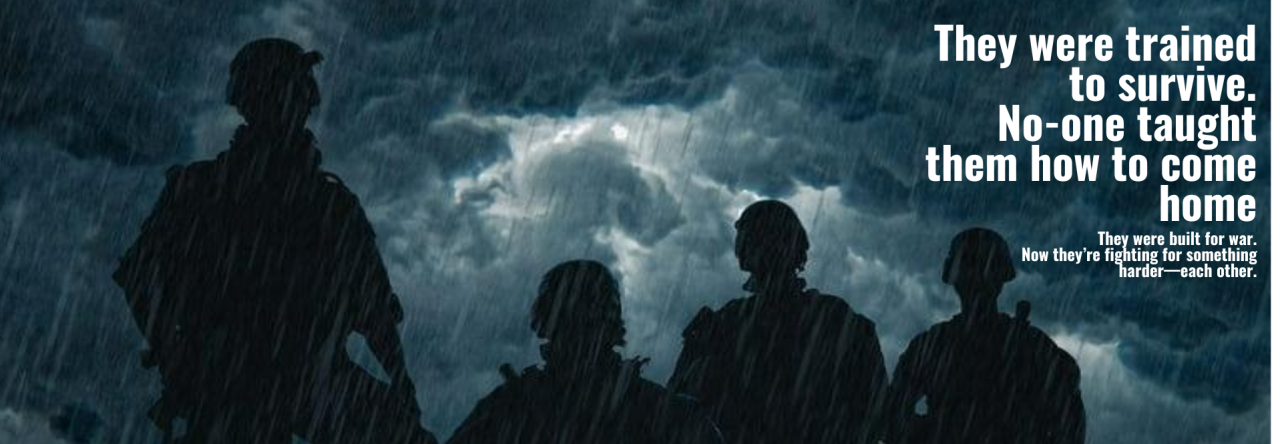
When Seeing Them Again Isn’t Soft

Reunions are often written as gentle things.

A moment of recognition across a room. The gradual realisation. Relief washing in slowly, softening everything. Two people finding their way back to each other in a scene that gives the reader time to breathe, time to feel it, time to settle into what’s happening alongside the characters.

There’s a reason that version exists. It’s earned. It’s earned when the story has built toward it carefully, when the distance has been long enough that arriving somewhere is its own kind of peace.

But not all reunions feel like that.

Some feel like impact.

Like everything you’ve been holding carefully in place — the distance you’ve maintained, the equilibrium you’ve constructed, the version of yourself that has learned to function without this person in it — shifts all at once. Without warning. Without the courtesy of a gradual approach. Like your body reacts before your mind has had any chance to catch up, before the part of you that makes considered decisions has even registered what’s happening.

Like there is no distance at all between what you feel and the moment itself.

That’s what this reunion is.

It’s not calm. It’s not measured. There’s no slow unfolding, no careful navigation of what this means or how to handle it. It’s immediate in the way that some things are just immediate — not because Marc and Finn are people who lose control easily, because they’re not, but because some things bypass the systems you’ve built to manage them.

Because when someone has that kind of history with you, seeing them again doesn’t come with a buffer. There’s no gradual adjustment period, no gentle recalibration. The body remembers what the mind has spent years trying to organise into something manageable.

It just hits.

And then you’re standing there, in the middle of whatever ordinary moment this interrupted, with all of it suddenly present and immediate and completely uninterested in your carefully maintained equilibrium.

And then you have to decide what to do with that.

That moment — the one right after impact, when the dust is still moving and nothing has been said yet and everything is possible and terrible simultaneously — is one of my favourite things to write. Not the reunion itself. What comes immediately after it. The split second where a character has to choose, consciously or not, who they’re going to be in response to something they weren’t prepared for.

Marc makes a choice in that moment.

Whether it’s the right one is something you’ll have to decide for yourself.

Almost Yours Again
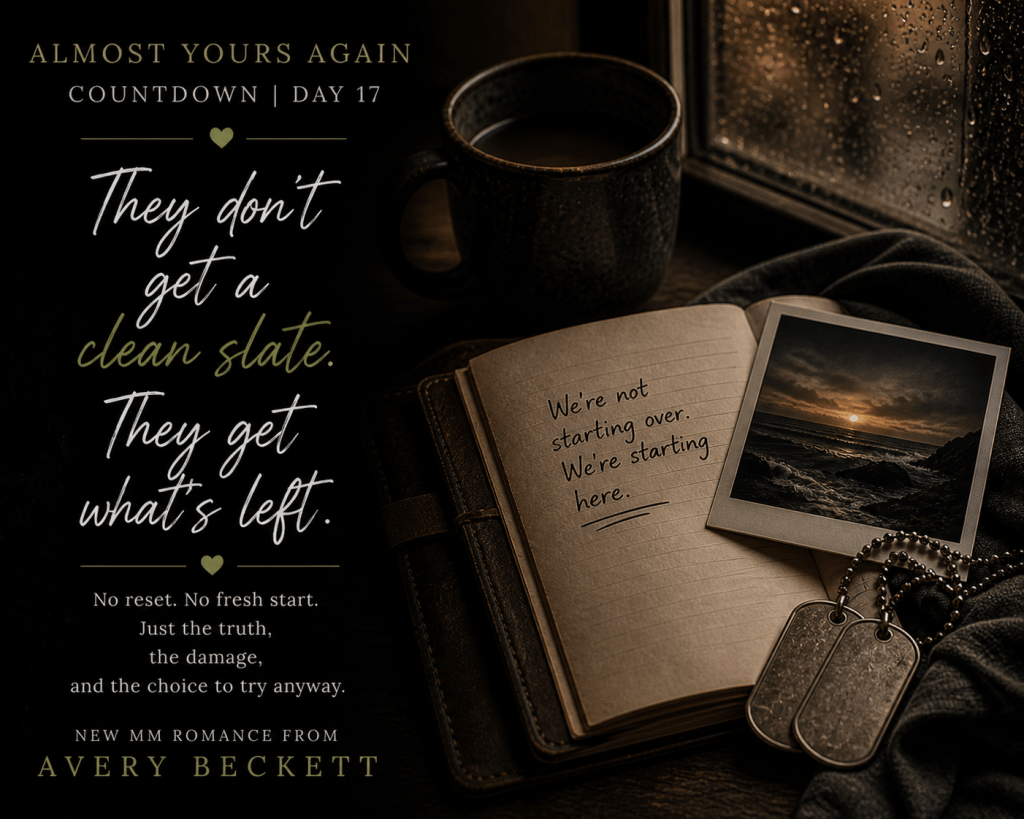
Who You Are After Everything Falls Apart

We spend a lot of time thinking about who characters are at the beginning of a story.

Their strengths. Their flaws. Their habits and history. The things that define them before anything changes — before the story has had time to work on them. It’s necessary work. You can’t know where someone ends up without understanding where they started.

But I’m always more interested in who they are after.

After the moment everything shifts. After the loss, the injury, the choice they can’t take back, the version of their life they thought they were living quietly disappears. After the thing that divides everything into before and after, whether they chose that line or had it drawn for them.

Because that’s where things get real.

It’s easy to write a character when the world is more or less cooperating with their sense of themselves. It’s considerably harder — and considerably more interesting — to write who they are when that cooperation has been withdrawn. When the identity they built, the one that fit them and felt solid, no longer quite applies.

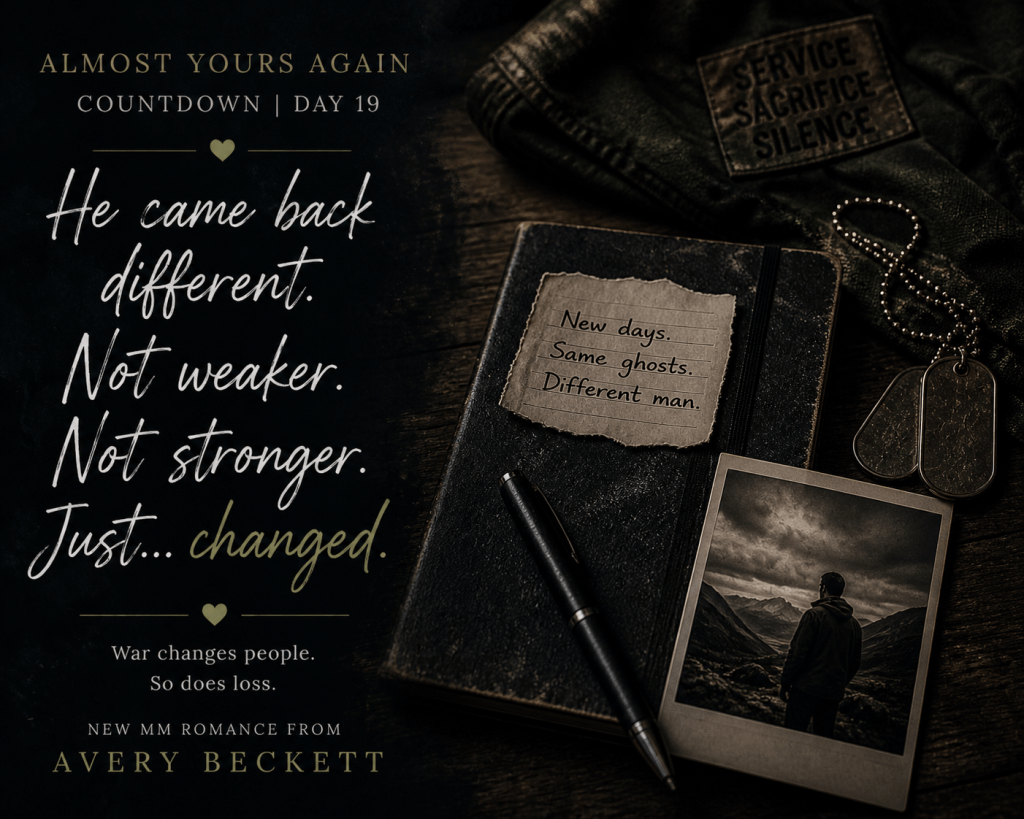
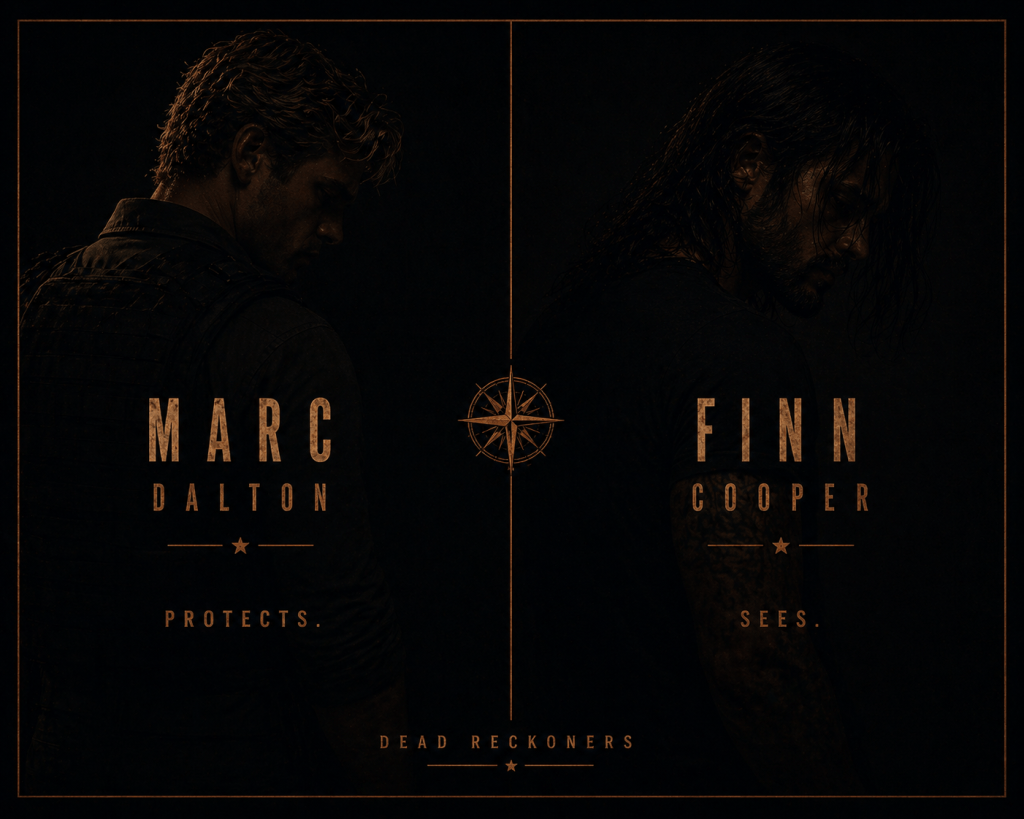
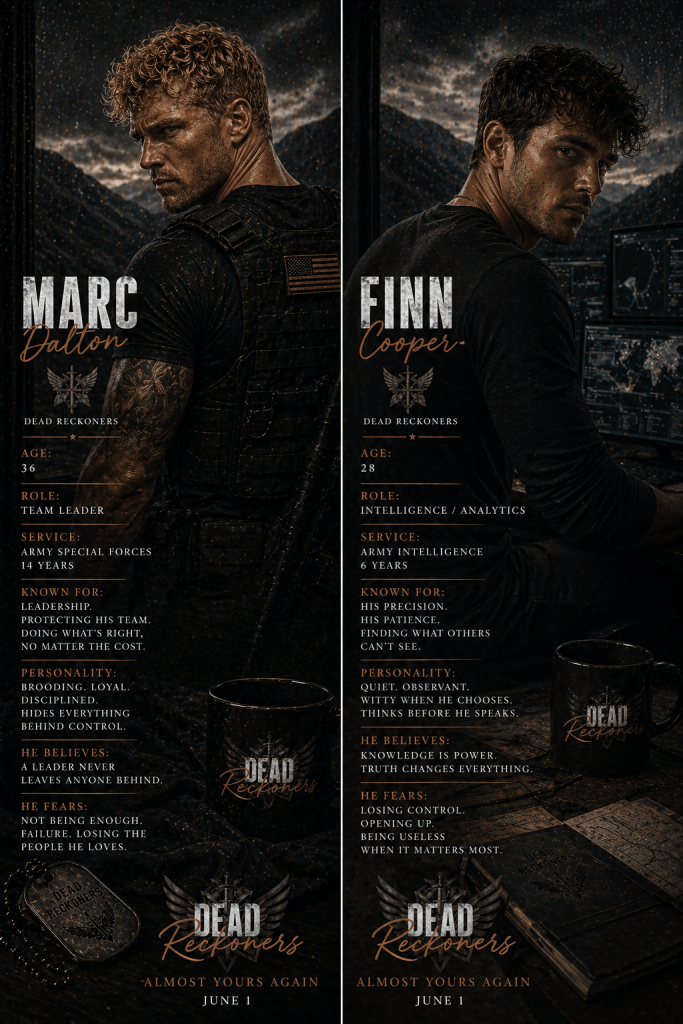
Finn isn’t the same person he was before.

I want to be careful about how I say what that means, because the shorthand is almost always wrong. It doesn’t make him weaker. It doesn’t make him stronger either, at least not in the ways people usually mean when they reach for that word — not the redemptive, forged-by-fire, better-for-it version of strength that stories often want to hand their characters as consolation. It just makes him different. And different comes with its own particular weight that isn’t quite weakness and isn’t quite strength and doesn’t fit neatly into either category.

It changes how you see yourself. How you move through the world. How you allow other people to see you — how much you let them in, how much you manage what they’re allowed to observe. The version of yourself you present, and the gap between that and what’s actually happening underneath.

Marc has to navigate that. He has to find his way to the version of Finn that exists now — not the one he remembers, not the one he carries in his chest from before, not the one he might, in his less honest moments, wish he could have back. The one who is standing in front of him. The one who has been through things Marc wasn’t there for, and carries them accordingly.

That’s not always an easy thing to do. Loving someone’s before without fully reckoning with their after is one of the quieter ways of failing someone — not out of cruelty, but out of grief for the version of them you lost. Marc is not a man given to that kind of self-indulgence, but he is a man with his own history, his own blind spots, his own particular way of needing things to make sense.

Learning to let Finn be who he is now — completely, without reservation — is part of what this story is about.

It might be the most important part.

Love That Survives Damage

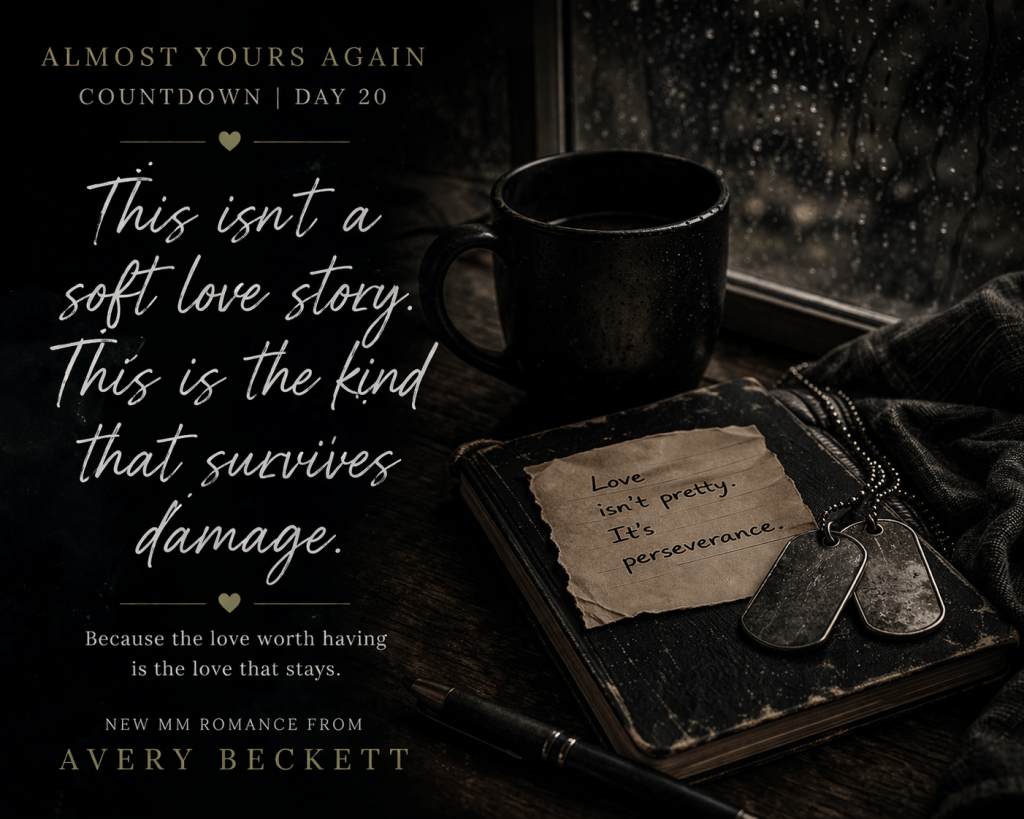
I don’t write soft love stories.

Not because I don’t believe in them. I do. There’s something genuinely lovely about a story where two people find each other before the world has had too much time to work on them — where the path is difficult but the people themselves are still, in some essential way, intact. I believe in those stories. I just don’t tend to write them.

What I’m interested in is what happens after.

After the damage. After the things that don’t leave you, even when you’ve technically moved on. After the years that change the shape of a person in ways both visible and not.

Because damage changes people. That’s not a dramatic statement — it’s just true. Physical damage. Emotional damage. The kind that comes from experience, from loss, from the accumulation of things you didn’t choose and couldn’t prevent. The kind that becomes part of your architecture whether you wanted it to or not. The version of someone before that damage isn’t the version you get later. They share a name, a history, a face — but they are not the same person, and pretending otherwise helps no one.

So the question I keep coming back to, the one that drives most of what I write, is this:

What does love look like after that?

Not before the damage. Not in spite of it. Alongside it.

In Almost Yours Again, nothing is untouched. There’s history between Marc and Finn that hasn’t been resolved neatly, because real history rarely is. There are things that were said, and things that weren’t. There are silences that calcified into something structural. There are physical realities that can’t be ignored or written around — things that happened to them, in the time between, that left marks. I wasn’t interested in minimising any of that. I wasn’t interested in a story where the damage turns out to have been smaller than it looked.

And still — there’s something there.

Not untouched. Not perfect. Not the clean, hopeful thing it might have been once, back before everything that came after. But alive. Stubbornly, inconveniently, undeniably alive.

That’s the love I’m interested in writing. The kind that has been tested by actual circumstances and not just plot mechanics. The kind that knows what the other person looks like at their worst and chooses to stay in the room. The kind that doesn’t require either person to be unbroken — just honest.

Marc and Finn are not easy people. They are not unscathed people. They are people who have been through things, separately and together, and come out the other side still recognisably themselves but fundamentally altered. Writing their love story meant taking all of that seriously — not as backstory to move past, but as the actual terrain the story moves through.

Because that’s what it is, for a lot of people.

Not a beginning. Not a clean slate. Just love, doing what love sometimes does — surviving.

Wanting Someone You Shouldn’t

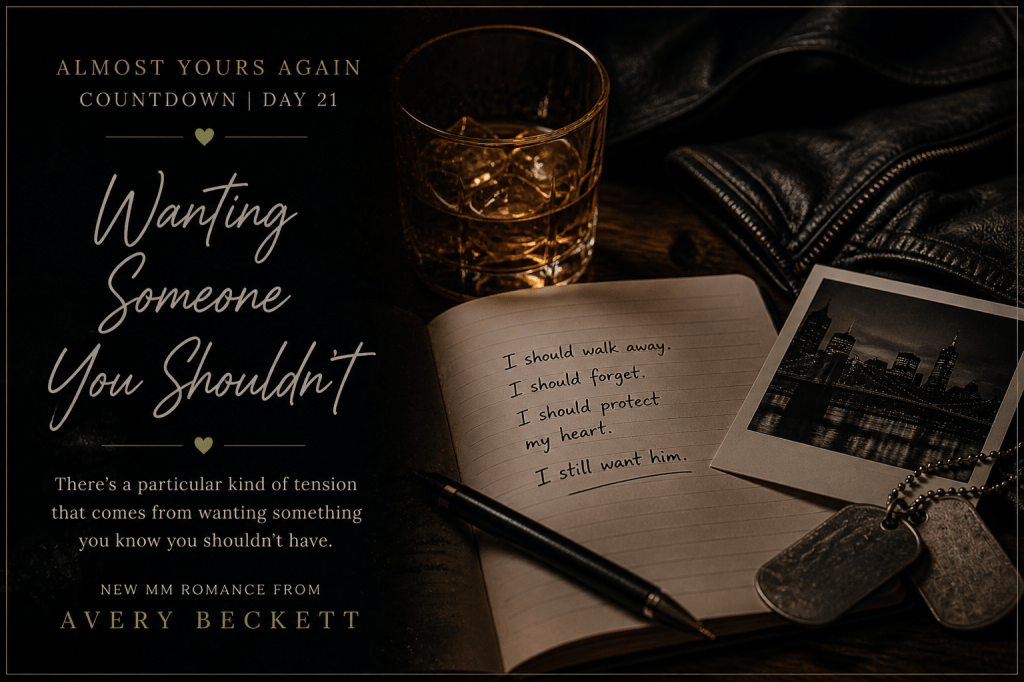
There’s a particular kind of tension that comes from wanting something you know you shouldn’t have.

Not in a dramatic, forbidden, star-crossed way. I want to be clear about that, because that’s a different story — and a good one, but not this one. This is something quieter than that. More internal. More personal. The kind of wanting that doesn’t announce itself with grand gestures and impossible circumstances. The kind that just sits there, steady and inconvenient, in the middle of an ordinary day.

It’s the kind of wanting that comes with history.

With context.

With the full understanding of what it meant the first time, and exactly what it could cost the second.

Marc knows what Finn means to him. He has always known. That’s part of the problem — there’s no ambiguity to hide behind, no comfortable uncertainty to retreat into. No illusion. No idealised version of what this could be if only things were different. He’s not reaching for something unknown. He’s standing in front of something he already understands completely, something that has already shaped him in ways he can’t undo and, if he’s being honest with himself, wouldn’t want to.

And he still wants it.

That’s where the conflict lives. Not in whether he should feel it — he does, and that part is beyond argument. The tension is in what he does with it. In the space between feeling something and acting on it, where every decision carries the full weight of what came before.

I find this particular kind of internal conflict endlessly interesting to write. It’s not about obstacles in the traditional sense. Nobody is standing in the way. No external force is keeping these two apart. The only thing between Marc and what he wants is Marc — his understanding of the situation, his awareness of the stakes, his knowledge, bone-deep and unambiguous, of exactly why this is complicated.

Because sometimes the hardest thing isn’t wanting someone.

It’s knowing exactly why you shouldn’t — and wanting them anyway.

These two asked a lot of me. Marc especially. He is not a man who makes himself easy to know, and he is certainly not a man who makes his inner life available for inspection. Getting inside that and writing it honestly — writing the wanting without softening the conflict, writing the conflict without cheapening the wanting — was the work of this book, and I hope it shows.

I hope it feels true.

Because I think most of us have stood somewhere in the neighbourhood of where Marc stands. Maybe not in the same circumstances. But in that particular place where you understand something completely and it doesn’t help at all.

The Ones That Never Really Leave You

There are some characters who move on.

They meet someone new. They build something different. They close the door on what came before and they don’t look back. And honestly? Good for them. Clean endings are a gift. Not everyone gets one, but when a character earns it, there’s a particular satisfaction in watching them walk through that door.

And then there are the others.

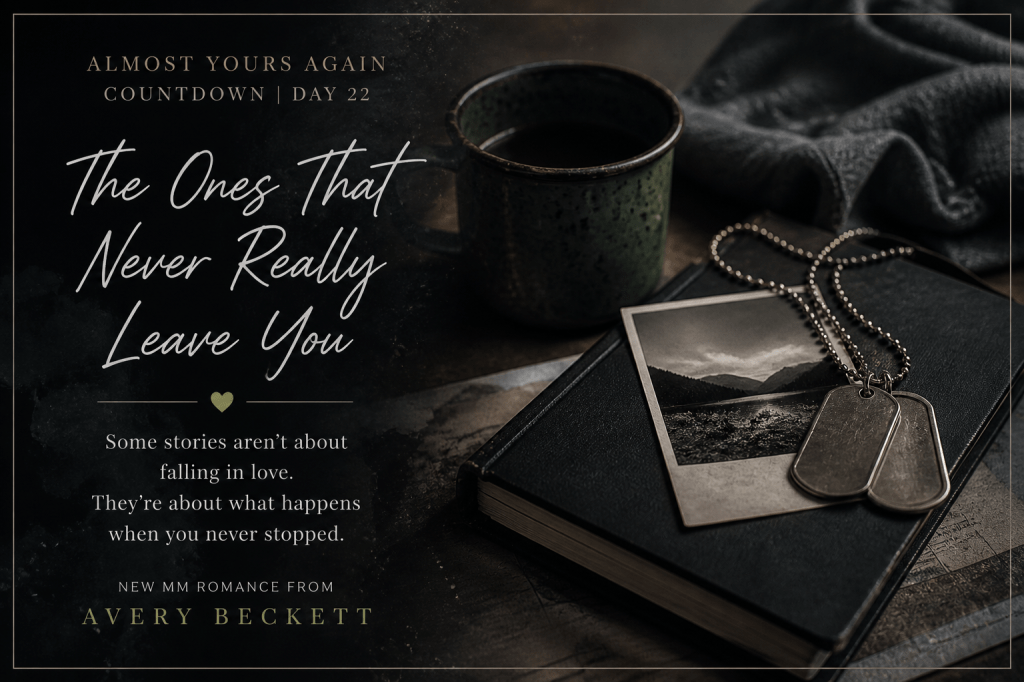
The ones who don’t leave. Not really.

They might not be physically present. They might be gone for years, or a lifetime, but they linger in the quiet spaces. In the habits you don’t realise you’ve kept. In the way you reach for your phone at a particular time of day out of sheer muscle memory, months after there’s any reason to. In the way you compare every almost to something that was never quite finished.

I’ve always been drawn to those stories. I suspect you know that about me by now if you’ve spent any time in my books. My people carry things. They are, most of them, exceptionally good at functioning — at performing fine, at continuing to show up and do the work — while quietly hauling the weight of something unresolved. It’s not a flaw I write into them. It’s one of the things I find most recognisably human about them.

Not because those stories are easy. They’re not. They’re messy and complicated and often a little uncomfortable to sit inside. But they feel honest in a way that clean endings sometimes don’t. The world is full of people walking around with someone living in the back of their chest — someone they don’t talk about, someone they’ve made their peace with, mostly, except on the days they haven’t.

Almost Yours Again lives in that space.

This isn’t a story about finding someone new. It’s not a story about moving on, about choosing differently, about learning to want something safer. It’s about what happens when the person you never stopped carrying comes back into your life — not as a ghost, not as a memory, but standing right there in front of you, real and present and looking at you like time hasn’t passed at all — and suddenly everything you’ve spent years keeping carefully contained starts to shift.

Because love doesn’t always end just because time passes. Sometimes circumstances end. Distance ends. The life you’d both been planning ends. But the thing underneath — that persistent, inconvenient, impossible-to-file-away thing — doesn’t always get the memo.

Sometimes it just waits.

I spent a long time with these two. Longer than I expected. They’re not easy people — neither of them is particularly inclined to make things simple, which made writing them a genuine exercise in patience and, occasionally, exasperation. But by the time I got to the end I understood exactly why they were each other’s person, and exactly why it had taken them this long to find their way back.

I hope you’ll come with me into their story.

Almost Yours Again is available now.

One Month Until Almost Yours Again

One month.

That is all that stands between this book and release day.

I keep thinking about how long stories live quietly before anyone else sees them. They begin as a thought. A scene. A question. A character who will not leave. Then they become notes, outlines, scraps of dialogue, deleted chapters, rebuilt scenes, late nights, second guesses, and stubborn little moments where something finally clicks.

And then somehow, after all that private work, there is a date.

June 1.

That is the day Almost Yours Again steps out of my hands and into the world.

I am trying to enjoy this part, even though my natural instinct is to panic, fiddle with everything, and decide at the last minute that perhaps I should become a hermit instead.

But there is excitement too.

Real excitement.

Because I love these characters. I love this damaged, loyal, complicated world. I love the way these men keep choosing each other even when they are afraid. I love the team around them, the tension, the found family, the old pain and new hope.

This book is Book 1

It is the first door into the Dead Reckoners world.

And in one month, I get to open it.

Thank you to everyone who has followed, read, encouraged, clicked, liked, or quietly wandered over here to see what I am doing. You are early, and that means more than you know.

One month to go.

In This World, Touch Is Trust

In the Avery Beckett world, touch is rarely casual.

That is one of the things I love most about writing emotionally restrained romance. Not every intimate moment has to be grand. Sometimes the smallest gesture carries the most weight.

A hand offered.
A shoulder brushed.
Fingers resting briefly against a wrist.
Someone standing close enough to be felt, but not demanding anything.

For characters shaped by service, trauma, injury, secrecy, and survival, touch can mean everything.

It can be comfort.
It can be memory.
It can be danger.
It can be permission.
It can be a question.

In Almost Yours Again, the physical relationship is complicated because the emotional relationship is complicated. These are not people who can simply fall into each other and have everything be easy. There is history between them. There is pain. There is love, yes, but love does not magically erase what happened.

So touch becomes language.

It becomes a way of asking, “Is this okay?”
A way of answering, “I’m still here.”
A way of saying, “I want you, but I will not take from you.”
A way of rebuilding trust without rushing the healing.

I think there is something powerful about restraint.

About characters who want each other and still choose care. Who feel desire and still make space for fear, injury, grief, and uncertainty.

That kind of tenderness matters to me.

Because sometimes love is not the dramatic declaration.

Sometimes love is the hand that does not grab.
The body that waits.
The person who could push, but doesn’t.

This Book Is For You If

Almost Yours Again might be for you if you like your romance emotional, intense, and a little bit wounded.

It might be for you if you love characters who do not say what they feel easily, but show it in every choice they make.

It might be for you if you enjoy second-chance romance where the past is not brushed aside. Where forgiveness is complicated. Where love is still there, but trust has to be rebuilt one careful moment at a time.

It might be for you if you like found family stories. The kind where the side characters are not just standing around waiting for their own books, but are already part of the emotional architecture of the world.

It might be for you if you like protectors who need protecting. Soldiers who know how to survive but not how to soften. Men who think wanting is selfish. Men who think being loved is something they have to earn.

It might be for you if you like quiet tension more than easy declarations.

A hand on a shoulder.
A pause at a doorway.
A look held too long.
A conversation that says everything except the words.

Almost Yours Again is not a light, fluffy romance.

It is about damage and devotion.
It is about love after fear.
It is about the terrifying choice to let someone close again.

And if that sounds like your kind of story, I hope you will meet these characters on June 1.

Found Family Is the heart of This World

Found family is one of the emotional engines of the Avery Beckett world.

Not as decoration. Not as a few side characters standing around to make the main couple look more interesting.

Found family is the structure holding everything up.

In the Compass Point and Dead Reckoners world, these characters have been through things that changed them. Some have been discarded. Some have been underestimated. Some have been told, directly or indirectly, that they are no longer useful.

But together, they become something else.

A unit.
A home.
A warning.
A place to land.

I love writing characters who know each other’s tells. The ones who notice when someone is too quiet. The ones who do not ask “are you okay?” because they already know the answer, so instead they put coffee down, take the closest chair, and stay.

That kind of loyalty is romance too.

Not romantic love, necessarily, but love all the same.

Found family means someone checks the locks because they know you will not sleep otherwise. Someone remembers the anniversary you pretend not to remember. Someone stands between you and the thing you are not ready to face. Someone makes room for the damaged parts without making them the whole story.

In Almost Yours Again, the romance matters deeply.

But it does not exist in isolation.

It grows inside a world where loyalty is fierce, where people are messy, where protection can be both gift and burden, and where being known is sometimes the most frightening thing of all.

That is the family I keep coming back to.

The chosen one.

The earned one.

The one that stays.

Meet Almost Yours Again

Almost Yours Again is the beginning.

Not the beginning of the whole world — because this world has been living in my head for a long time — but the beginning of Avery Beckett stepping out into the open.

This book is a military romance novella about history, damage, loyalty, and unfinished love.

At its heart are two men who once meant everything to each other. Life, service, secrecy, injury, fear, and time have changed them both. They are not walking back into something simple. They are not picking up where they left off as if nothing happened.

Too much happened.

That is what makes this story matter to me.

I love second-chance romance when the second chance has a cost. When love is still there, but trust has to be rebuilt. When attraction is complicated by grief. When wanting someone is not the same as knowing how to reach for them.

Almost Yours Again is not about pretending the past did not hurt.

It is about asking whether love can survive what happened. Whether tenderness can exist alongside trauma. Whether two people can find their way back without erasing the damage that changed them.

There is found family here. There is military history. There is emotional restraint. There are hard conversations and quiet moments where the silence says more than dialogue ever could.

This is Book 1.

The door opens here.

And on June 1, readers get to step through it.