How They Became Family

I get asked sometimes how the Compass Point team became what they are — this particular group of people, this specific found family that somehow held together across years and deployments and everything that comes with both. And the honest answer is that I’m not entirely sure it was a choice. Not a conscious one, anyway. It was more like something that happened to them while they were busy surviving other things.

Let me tell you where they started.

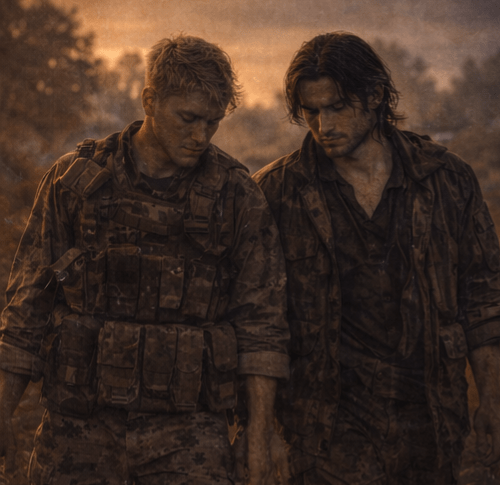
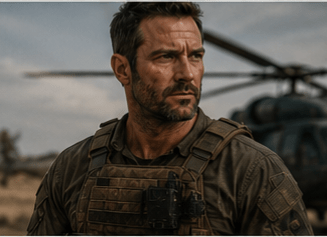
Marc’s team was part of an international peacekeeping force — special forces drawn from across the globe, different countries and different arms and different traditions all pressed together under the same operational umbrella. Australians and Americans and Canadians and British. SEALs and Rangers and Delta and SAS and combinations thereof that would make a traditional military org chart weep quietly into its margins. It was not, on paper, a natural fit. In practice it turned out to be the only thing that made sense.

Personnel cycled through constantly. That is the nature of that kind of work — people come, people go, tours end and assignments change and the team you had last rotation is not quite the team you have this one. Marc’s brother Cole served a tour with them, which is its own complicated chapter in its own complicated story. Darius filtered in and out for infiltration work the way Darius does everything — quietly, thoroughly, leaving you slightly unsettled about how much he observed while he was there. Sienna and Harper were frequent inserts, two women who could walk into any environment and be completely underestimated right up until the moment that became someone else’s problem.

But the core stayed.

I’ve thought about why, and the best answer I have is this: they were good at their jobs individually, but together they became something that was harder to explain and harder to replicate. Garrett as their medic — steady-handed and steady-tempered in the way that the person responsible for keeping everyone alive needs to be, carrying more than anyone saw and asking for less than anyone should have to. Sonny on breach, which requires a very particular combination of precision and nerve that Sonny makes look effortless and is absolutely not. Finn on demo and intelligence, which tells you most of what you need to know about Finn — that he is simultaneously the person who understands the mechanics of destruction better than almost anyone and the person who is always, always thinking three steps ahead of the destruction. Wyatt on security, which suits him down to the ground because Wyatt’s entire orientation toward the people he cares about is protection, at every level, in every context. And Knox sharing demo with Finn — which required a particular kind of trust that not everyone is capable of, and which tells you something about both of them that neither of them would ever say out loud.

They saw things together that change people. They did things together that cost people. They lost people — not from the core, mostly, though there were close calls that still live in the spaces between them when the room gets quiet enough. But around them, the work was full of loss, and grief shared in that specific way — not talked about, not processed in any conventional sense, just carried together — does something to people. It builds a particular kind of bond that doesn’t have a clean civilian equivalent. You were there. I was there. Neither of us needs to explain it to the other. That is the foundation of it.

The family didn’t announce itself. It accumulated. One deployment at a time, one crisis at a time, one three-in-the-morning moment at a time when the only people who understood were the ones right there in the same dark.

By the time they came home — really came home, for good, or as close to for good as people like them ever get — they had been family for years without ever quite saying so. Compass Point was the shape that family took in civilian life. Not a job. Not a business arrangement. A way of staying together once the thing that had held them together was over.

It has never been just a company.

It has always been them.

— Avery
One Day (Give or Take a Time Zone)

Tomorrow. Or today, depending on where you are in the world and whether we’re running on Australian or US timelines, which is a question I genuinely cannot answer with confidence right now. Somewhere in the next twenty-four to forty-eight hours, this becomes real.

I should probably explain who I am, for anyone who has stumbled in here without context.

My name is Avery Beckett. I am one of four — yes, four — personas currently occupying the same head, which is exactly as chaotic as it sounds and also, apparently, standard industry practice. When I was at university they drummed it into us with considerable conviction: readers won’t follow authors across genres. If you write MM military romance and MM hockey romance and romantasy and magical realism, you need four personas. Keep your audiences clean. Don’t confuse anyone.

I’m not entirely sure I agree. But I also don’t want to alienate anyone, so four personas I have. It makes a certain kind of sense. Most days.

Avery is the military one. I am sassy and sarcastic and possessed of a sense of humour that runs darker than most people expect, which is appropriate given what I write. I have been living with the Compass Point universe since 2018 — refining it, deepening it, rebuilding it from the ground up over the last two years into something I’m genuinely proud of. Forty books across four ten-book series. MM, MF, FF, MFM — because love in the Compass Point universe doesn’t sort itself neatly into categories and I decided early on that I wasn’t going to make it. Whether that turns out to be a brave creative decision or a spectacular miscalculation remains to be seen. Probably both, knowing me.

And that’s before we get to the other Avery projects. The series following a team through special forces selection. The smoke jumper series. The gritty, dirty detective series set during and just after World War Two, which exists in a genre category largely of its own and which I love unreasonably.

I have been writing for a very long time. I have been writing this for a very long time. And somehow, despite all of that, despite the years and the drafts and the refining and the rebuilding and the four factory resets of the modem and the trivia nights and the cats and all of the rest of it — this still feels unreal.

One day. Maybe two. Somewhere in the gap between time zones, Almost Yours Again is going to exist in the world in a way it hasn’t existed before.

Thank you. For every comment and every share and every preorder and every kind word. For reading these rambling posts from someone who still can’t quite believe this is happening. For being here at the beginning of something that I have waited a very long time to share.

It means more than I know how to say. And given that I write for a living, that is saying something.

What I Hope You Take Away From Almost Yours Again

I could talk about the plot. I could tell you about the love story, about Marc and Finn and the long road back to each other, about what it costs and what it gives back. That story matters to me enormously and I hope it matters to you too.

But that’s not what I most hope you carry with you when you close the final page.

What I hope you take away is this: a little more understanding. A little more patience. A little more willingness to look at someone who seems fine, who looks fine, who is functioning and present and getting through their days — and understand that fine is sometimes the bravest thing a person can manage.

We send our people to war. We send them into environments where every sense is weaponised against survival — where a sound means incoming, where a shadow means danger, where the body learns, because it has to learn, to treat the world as a place that is trying to kill you. The nervous system does not know it’s fictional. It cannot distinguish between a training environment and a combat zone, not after long enough, not after enough repetition. It simply learns. It adapts. It rewires itself around the information it has been given, which is: this is what threat sounds like. This is what danger feels like. This is what you do to survive.

And then we bring them home.

We bring them home and we expect the rewiring to reverse itself. We expect them to sit at a backyard barbecue while balloons pop around them and not flinch. We expect them to hear a helicopter overhead and think nothing of it. We expect sirens to be background noise rather than the thing their entire nervous system still insists, at a level below conscious thought, means something is very wrong.

They cannot always do that. Not because they are weak. Not because they haven’t tried. But because the body remembers what the mind is trying to move past, and the body is not interested in being reasoned with.

Finn Cooper knows this. He lives inside it. And what I wanted to write — what I tried, with everything I had, to get right — is not the dramatic version of that struggle but the daily version. The private, exhausting, unglamorous reality of carrying something that most people around you cannot see and would not understand if they could.

I hope that when you finish this book and you encounter someone in your life who struggles with loud noises, with crowds, with unpredictability, with the ordinary chaos of a world that doesn’t know it’s supposed to be safe now — I hope you think of Finn. I hope you extend the grace that Finn deserves and doesn’t always receive. I hope you understand, even a little more than you did before, that what looks like overreaction from the outside is often survival from the inside.

Our veterans gave something that cannot be fully given back. The least we can offer in return is understanding.

That is what I hope you take away.

That, and the love story. Always the love story.

— Avery

The Hardest Scene to Write

Every book has one. The scene you circle for days before you finally sit down and face it. The scene you write and delete and rewrite, not because you can’t find the words but because the words keep costing you something.

For Almost Yours Again, it was the first one.

Not the inciting incident. Not the climax. The very first scene — Finn walking back to Marc.

I need you to understand what that costs him, because I think it’s easy to read courage and miss the layers underneath it. Finn Cooper is not, at this point in the story, a man who has much left to lose. He is broken in ways that he has stopped trying to catalogue. He is running on the particular kind of fuel that people run on when they have nothing left except one thing — one person they would burn themselves down to protect.

Flick. His sister. The person he has already sacrificed more for than anyone should ever have to sacrifice.

And he knows, with absolute clarity, that Marc will keep her safe. Regardless of everything. Regardless of how thoroughly and justifiably Marc now hates him. That is not a question in Finn’s mind — it is the one certainty he is carrying into that room. Marc Dalton is a great many complicated things, but he does not let innocent people come to harm. Finn knows this the way he knows his own heartbeat.

So Finn will fall on his sword. Willingly. He will hand Marc whatever ammunition Marc needs, accept whatever judgement is coming, make himself the price of Flick’s safety without flinching. That part, as terrifying as it is, is almost simple. It is a transaction Finn has already agreed to internally before he ever knocks on the door.

What he is not prepared for is the other thing.

Because somewhere underneath the broken pragmatism of Marc will protect her, there is something Finn has not fully let himself examine. He still loves Marc. He has never stopped. It is not something he chose or something he can undo — it is simply true, the way gravity is true, constant and unglamorous and not particularly interested in whether it’s convenient.

But here is the thing about Finn that took me a long time to fully understand, and that I think is the key to everything he is: the distance didn’t diminish it. Every month apart, every silence, every version of the life he was supposed to have that quietly closed its doors — none of it made him love Marc less. It made him love Marc more. As though loss and longing, instead of wearing the feeling down, kept deepening it. Kept adding to it. As though Finn’s love for Marc grew in the dark the way some things do — not despite the absence of light but because of it.

By the time he walks back through that door he is carrying years of that. Years of a love that just kept growing with nowhere to go.

And he does not believe it goes the other way anymore. How could it? After everything. After the choices Finn made and the damage they caused and the particular, irreversible way he disappeared from Marc’s life. Love does not survive all of that intact — or so Finn has told himself, so many times that it has become the architecture of how he moves through the world. He has accepted it. He is not walking back to Marc to reclaim anything for himself.

That is what makes it the hardest scene I’ve ever written.

Not the courage it takes to walk into that room knowing he might not walk back out the same way. Not the fear, not the brokenness, not the weight of everything riding on the next few minutes. What makes it almost unbearable to write is the quiet devastation of a man carrying a love that has only ever grown larger, walking toward the person at the centre of it, certain — absolutely certain — that what he’s bringing has nowhere left to land.

Finn is not hoping when he goes back to Marc. He has placed himself beyond hope, because hope is a luxury he can’t afford and a wound he can’t survive reopening.

He just loves him. Deeply, helplessly, more than ever.

And he’s made peace with the fact that it doesn’t matter anymore.

That is so much harder to write than anything a bullet could do to him.

And that is exactly why it had to be the first scene.

— Avery

How Compass Point Became More Than Just a Series

People sometimes ask me how I know these characters so well. How Marc moves, how Finn thinks, why Knox holds the world the way he does. The honest answer is: I’ve been living with them for a very long time, and the road that brought us here is not the road I expected to be on.

Compass Point started, as many great things do, with a best friend and a very good idea.

It wasn’t quite fanfic. Almost. The plan was something like fanfic — take the characters we loved from something else, keep the best parts of them, round out their edges for a military and PI setting, write the story we wanted to read. My best friend and I were going to build it together. And we started to. But somewhere in the building, something shifted. Our characters started feeling more real to us than the ones we’d borrowed them from. They started making their own decisions, developing their own histories, wanting things the originals never wanted. So we changed the names. Changed most of what there was to change. And they became ours.

We kept writing together. Forty-five books, shorter than they are now, built across years of loving these characters and needing to tell their stories. And then something wonderful and slightly chaotic happened, as it tends to when creative people spend enough time together: we both kept growing, but in different directions. The universe we’d built together started morphing — shifting from gritty ex-military PI territory into something altogether more magical. Magical realism crept in, as it does, and the original stories began to change shape around it.

Except the boys had opinions about that.

Marc and Finn and Knox, bless them, did not want to change. They had been built in a particular world and they intended to stay in it, thank you very much. So my friend and I had a conversation, and she gave me something extraordinary — she told me to keep them. Keep what I’d written, make it fully mine, release it as my own work.

And here is the part I love most: we are still writing together. The original stories, the ones that started all of this, are still being written — now with that magical realism woven through them, now with the universe we’ve both been building. We didn’t part ways. We just found we had two sets of stories to tell instead of one.

The gift of it, beyond the obvious, was this: I arrived at my new beginning already knowing these people down to the bone. I don’t have to think about how Marc will react under pressure or what Finn will sacrifice without being asked or how Knox loves — fiercely, quietly, with his whole chest. I just know. The way you know the people who have been in your life long enough to become part of your furniture.

So I took those forty-five books, already written and already loved, and I started making them into what they always deserved to be. Deeper. Fuller. Given the space their stories actually needed. The first ten are completely finished and working through their final edits. The next ten are close — they need a little adjustment because some of the earlier outcomes have shifted, the way they do when a series grows into itself and you have to go back and make the foundations match the building. Books twenty to thirty are fleshed out and need a little more attention. Series four is all there in first draft, waiting for the polish that’s coming.

It’s a long road. But I know exactly who I’m travelling it with — both the characters who refused to leave, and the friend who let me keep them.

These people are real to me in a way that defies easy explanation. Not real in a worrying way — I know the difference between a character and a person. But real in the way that matters for writing: I understand them. I love them. I would go to considerable lengths to do right by them.

That’s what Compass Point is. That’s why it’s more than just a series.

— Avery

The Atmosphere Behind Almost Yours Again

Every book has an atmosphere before it has a plot. A feeling, a weight, a particular quality of light. Almost Yours Again had that before it had a single scene — and it came not from research, not from craft, but from friendship.

I have known someone since he was very small. I watched him grow from a toddler into a young man, and then into a soldier, and I am deeply proud of the person he became. His story is not mine to tell, and I won’t tell it here. But over the years, in the way that people who trust each other sometimes do, he told me things. Not everything. Enough.

He stood on an IED. His was disarmed by his teammates in time. Three others on his team were not so lucky.

I want to sit with that for a moment, because I think it needs to be said plainly rather than folded into something more literary. He came home. Three of his people didn’t. And he has to live inside that fact every single day — the randomness of it, the absolute absence of fairness in it, the way survival can feel less like a gift and more like a question you can never fully answer.

He came home changed, as soldiers do. He struggled to fold himself back into the shape of ordinary life — the rhythms of it, the smallness of it after everything he’d seen and done and carried. The world expected him to step back in, to fit the space he’d left behind, and that space no longer matched his edges. PTSD is not a plot device. It is not a dramatic flourish or a backstory beat. It is exhausting and relentless and often invisible to everyone but the person living inside it and the people who love them enough to keep watching closely.

He gave me things, through those conversations, that I could not have found anywhere else. Not the facts — the facts you can research. The texture. The specific, unglamorous reality of it.

A lot of Finn’s choices in this book are his choices. The way Finn moves through the world, the things he reaches for and the things he flinches away from, the particular logic of decisions that might look self-destructive from the outside but make a precise kind of sense when you understand what he’s trying to manage — that came from someone real, who lived it, who was generous enough to let me sit with him in the hard parts of it. The survivor’s guilt that runs underneath Finn like a current — that is real too. Borrowed from someone who knows exactly how heavy it is.

I don’t write that lightly. I wrote Almost Yours Again with a constant awareness that real people survive these things, that real people are still surviving them, and that they deserve to see themselves rendered honestly rather than tidily. Marc and Finn are fictional. The emotional truth underneath them is not.

If this book resonates with you — if something in Finn’s struggle feels familiar, either because you’ve lived it or because you’ve loved someone who has — then it’s doing what I hoped it would do.

And to the friend who let me borrow from his experience without ever asking for anything in return: you know who you are, and I am still, always, proud of you. All the way back to when you were very small.

— Avery

Writing Men Who Love Softly

There is a particular kind of man I keep coming back to in my writing.

He is not soft in the way the word is sometimes used as an insult — he is not weak, not passive, not without edges. He has often survived things that would have unmade a person with less core. He carries himself with a kind of controlled stillness that people sometimes mistake for coldness. He is, by most external measures, formidable.

And he loves like he’s terrified of what it means that he loves this much.

That’s the man I’m interested in. That’s always been the man I’m interested in.


Marc Dalton is not a soft man by anyone’s definition of the word. He is a man who was built, through circumstance and necessity and years of operating in environments that rewarded hardness, to take up a very specific shape. Contained. Controlled. Competent in ways that leave very little room for uncertainty. He leads, he protects, he solves — and he does all of it from behind a level of emotional management that took decades to construct.

And then there is Finn Cooper, who is — in his own way — just as armoured. Finn’s softness is deceptive, and that’s what makes him so interesting to write. He looks more open, more present, more immediately warm than Marc. But Finn stopped eating to keep his sister safe. Finn dragged a man thirty metres with a fractured skull. Finn’s softness is not fragility. It’s something that survived an enormous amount and came out the other side still capable of tenderness, and that’s a very different thing.

What happens between them is not the collision of hard and soft. It’s the collision of two people who both built walls — different walls, different materials, different architectural styles — and then found themselves in a space where the walls were no longer strictly necessary and had no idea what to do with that information.

That’s where the love lives. In that not-knowing.

When I write men who love softly, I’m not writing men who have been declawed or domesticated or relieved of their complexity for the sake of being palatable. I am writing men who have access to the full range of what it means to be human — which includes tenderness, and uncertainty, and the willingness to be seen — alongside everything else they are.

Marc learning to let Finn in is not Marc becoming less. It is Marc becoming more. The control doesn’t disappear — it shifts. It turns toward something. He brings to loving Finn the same absolute commitment he brings to everything else in his life, and when you combine that with a man who has finally been given somewhere safe to direct it, the result is — well. It’s the reason I write.

Finn, for his part, loves with a kind of fierce quiet that surprises people who’ve misread his openness as lightness. He is not light. He is warm, which is a different thing entirely. He loves Marc with the same determination he applied to surviving everything that came before Marc — completely, practically, without drama, as if it is simply the next right thing and he has decided to do it properly.

Two men who have been through the fire, loving each other with every tool the fire left them.

That’s soft, in the way I mean it. Not gentle as the opposite of strong. Soft as in — without armour. Soft as in — here I am, this is what I actually am, and I am giving it to you anyway.


I think we underfund this narrative in fiction about men. We are very good at the falling — the tension, the conflict, the almost-and-not-yet. We are less practiced at the being in it. The morning-light version of love. The quiet scene that doesn’t have dramatic stakes, just two people existing in the same space and choosing each other in a way that is so habitual it’s become structural, like load-bearing walls.

Marc making Finn coffee before he’s asked. Finn knowing exactly when to speak and when to simply be present. The way they have built, without a blueprint and against considerable odds, something that holds.

That’s what I want to write. Men who are not diminished by love but completed by it. Men who arrive at tenderness the long and difficult way and turn out to be extraordinarily good at it.

Men who love softly.

It’s the bravest thing I know how to write.

— Avery

The Characters Who Refused To Be Minor

Every writer has them. The characters you built for a purpose — a plot function, a narrative requirement, a single scene that needed filling — who turn around somewhere around chapter three and inform you, with considerable conviction, that they have no intention of being what you designed them to be. They are going to be something larger. They were always going to be something larger. You just didn’t know it yet.

Flick Cooper was supposed to be a plot device.

I say this with full honesty and no apology, because understanding what she was supposed to be is the only way to appreciate what she became. Flick existed, initially, to explain Finn. Specifically, to explain why Finn had let himself go so badly — why a man with his capacity and his history had arrived at the state he was in when Marc found him. The answer was Flick. His sister. The one their father had sold, the one Finn had spent years quietly destroying himself to protect, the financial calculation he made every time he chose not to eat so the money could go somewhere it mattered more than feeding him. She was backstory. She was the why behind the wound.

She had other ideas.

Flick dug her heels in somewhere in the drafting and simply refused to leave. Not loudly — that’s the thing about Flick, she is not always loud about what she wants, she is simply immovable once she has decided — but with a persistence that made it increasingly clear that she was not going to be filed under ‘plot function’ and left there. She wanted the full story. She wanted the complexity. She wanted the band she’d built with Izabella, and she wanted Izabella with her, and she pulled both of them out of the margins and into the centre with the quiet stubbornness of someone who has survived considerable things and has decided she is owed a story of her own.

And she was right. She was absolutely right. Flick is one of the most specific and fully alive characters in the Compass Point universe, and she became that by refusing to be less than she was. She brought Izzy with her — Marc’s daughter, sixteen, a musician finding her way inside a family that is considerably more complicated than most — and the two of them together changed the texture of the books in ways I could not have planned and would not trade.

If I have to choose, though — if I have to identify the characters outside of Marc and Finn who carry the most weight with me — I always come back to Knox and Garrett.

These two arrived with their own gravity and they never let it go.

What strikes me most about Knox and Garrett is this: they may be more broken than Marc and Finn. I say that with full understanding of how much that means, given what Marc and Finn have been through. But the breaking is different. Marc and Finn’s damage has a specific shape — it comes from specific origins, it was done to them by specific forces, and its edges are, with enough time, mappable. Knox and Garrett’s damage is the kind that builds slowly, that comes from the accumulation of right choices made in impossible circumstances, from carrying things that are too heavy for too long in the service of people who need them to keep standing.

Knox’s hearing is going. He carries this quietly, which is the most Knox possible response to something that would destroy most people’s sense of themselves. Garrett’s nights are a war zone he navigates alone, or has until now. Both of them are people who have done everything right and paid the full cost of doing everything right, and the love between them — ten years of it, unacknowledged, held in trust because naming it felt more dangerous than carrying it — is the love of two people who have protected everyone except each other.

They bear equal weight with me. That is the truest thing I can say about them. I hold them as carefully as I hold Marc and Finn, which is saying a great deal.

Flick refused to be a device. Knox and Garrett refused to be minor characters. They were all right. Some of the best things in the Compass Point universe exist because the characters themselves demanded them.

I have learned to listen when they dig their heels in.

— Avery

Why Broken Characters Feel The Most Human To Me

I’ve been asked before why I keep writing damaged men.

It’s a fair question. The Compass Point universe is full of them — ex-military, ex-operational, men who came home carrying things that don’t show up on any medical chart. Men who are functional on the outside and quietly fractured somewhere deeper. Men who have learned to perform okayness so convincingly that even the people who love them sometimes miss what’s underneath.

The honest answer is: because that’s what humans look like to me.

Not the polished ones. Not the ones who have it together. The ones who are doing their level best with a set of tools that got bent out of shape somewhere along the way. The ones who still show up, still try, still reach toward connection even when every instinct they have is telling them to pull back and protect themselves. Those are the characters that feel real to me. Those are the characters I can’t stop writing.

Marc and Finn felt important for a reason that’s a little difficult to articulate, which is usually a sign that it matters.

They’re not damaged in the same ways. That was the first thing that pulled me toward them — the idea that two people can be equally broken and broken entirely differently, and have to learn to navigate not just each other’s wounds but the strange places where those wounds intersect. Where one person’s damage presses directly on another person’s fracture line without either of them meaning for it to. That’s where the interesting writing lives. Not in the wound itself, but in the gap between two people who are both trying and both struggling and both — underneath all of it — desperately wanting to be known by someone.

There’s a particular kind of courage in an emotionally damaged character that I don’t think we talk about enough. It’s not the courage of the battlefield, though these men have that too. It’s the smaller, quieter, more frightening courage of choosing to try again. Of staying in a room when every trained instinct says to leave. Of saying the thing out loud when silence would be so much safer. That courage isn’t dramatic. It doesn’t make for a great action sequence. But it’s the thing that undoes me every time, as a writer and as a reader.

Marc and Finn made me work for their story in ways that felt important. They didn’t make it easy. They weren’t going to let me write around the hard parts or soften the edges or resolve things faster than they could realistically resolve. They needed me to sit in the discomfort with them, which is — I think — exactly what good romance requires. Not the avoidance of pain but the willingness to move through it, together, toward something real.

The thing about broken characters is that wholeness, when it comes, means something. It can’t be taken for granted. It was paid for in full, and the reader knows it, and the characters know it, and that earned quality of the happy ending is what separates a love story that stays with you from one that simply concludes.

I write damaged men because damage is honest. Because healing is the most hopeful thing I know how to put on a page. And because Marc Dalton and Finn Cooper reminded me, all over again, that the most human thing any of us can do is keep reaching for connection even when we’re not sure we deserve it.

They deserved it.

They always did.

— Avery

I did a thing

It’s Out There. Almost Yours Again Is Actually Out There.

Tonight I uploaded Almost Yours Again to Amazon, and now I’m sitting here staring at the listing like I’m waiting for it to do something.

It won’t do anything. It’s a book listing. But here I am.

This one has been living in my head for a long time — longer than I’ll admit to — and now it belongs to anyone who wants it, which is the most exhilarating and quietly terrifying thing a writer can experience. You spend all this time with these people. You know how they think, how they argue, how they sound at two in the morning when everything is falling apart. And then you hand them over, and they’re not just yours anymore.

I think that’s the right thing. I’m about ninety percent sure that’s the right thing.

Here’s what I can tell you: this book is the beginning of something much bigger. The universe these characters live in has been mapped out to forty books. Forty. That number sounds absurd when I type it, but every single one of those stories exists for a reason — because the people in this world are complicated and layered and they don’t let go of you once you find them. Marc and Finn and the rest of the Compass Point crew have a lot of road still ahead of them.

The first ten books are written and edited and ready. One a month for the next ten months. Whether that plan makes me dedicated or slightly unhinged is genuinely up for debate, and I’m choosing not to examine it too closely right now.

Right now I just want to sit with the fact that Almost Yours Again is real. It’s listed. Someone out there who needs this story can find it.

That’s not nothing.

That’s actually everything.

If you pick it up — thank you. If you love it, tell someone. If you want to know what comes next, stay close. There is so much more coming.